
Steam-bending oak: the craft behind our garden benches
A curve in the right place can make a garden feel quite different. It can follow the edge of a terrace, gather people around a shared space or give a seating area a shape that belongs to its setting.
The examples below show how curved oak benches can complement the shape and layout of a garden.
How steam bending creates the curve
Steam bending uses heat and moisture to make timber more pliable, allowing it to be shaped around a form and held while it cools and sets. My work with oak has involved a purpose-built steam box, carefully selected timber and substantial jigs to control the shape.
The finished curve depends on more than the drawing. The grain of the oak matters, and the timber tends to spring back when released. Allowing for that movement is part of the craft. Experience includes learning from the pieces that did not behave quite as expected.
Two benches, designed for their setting
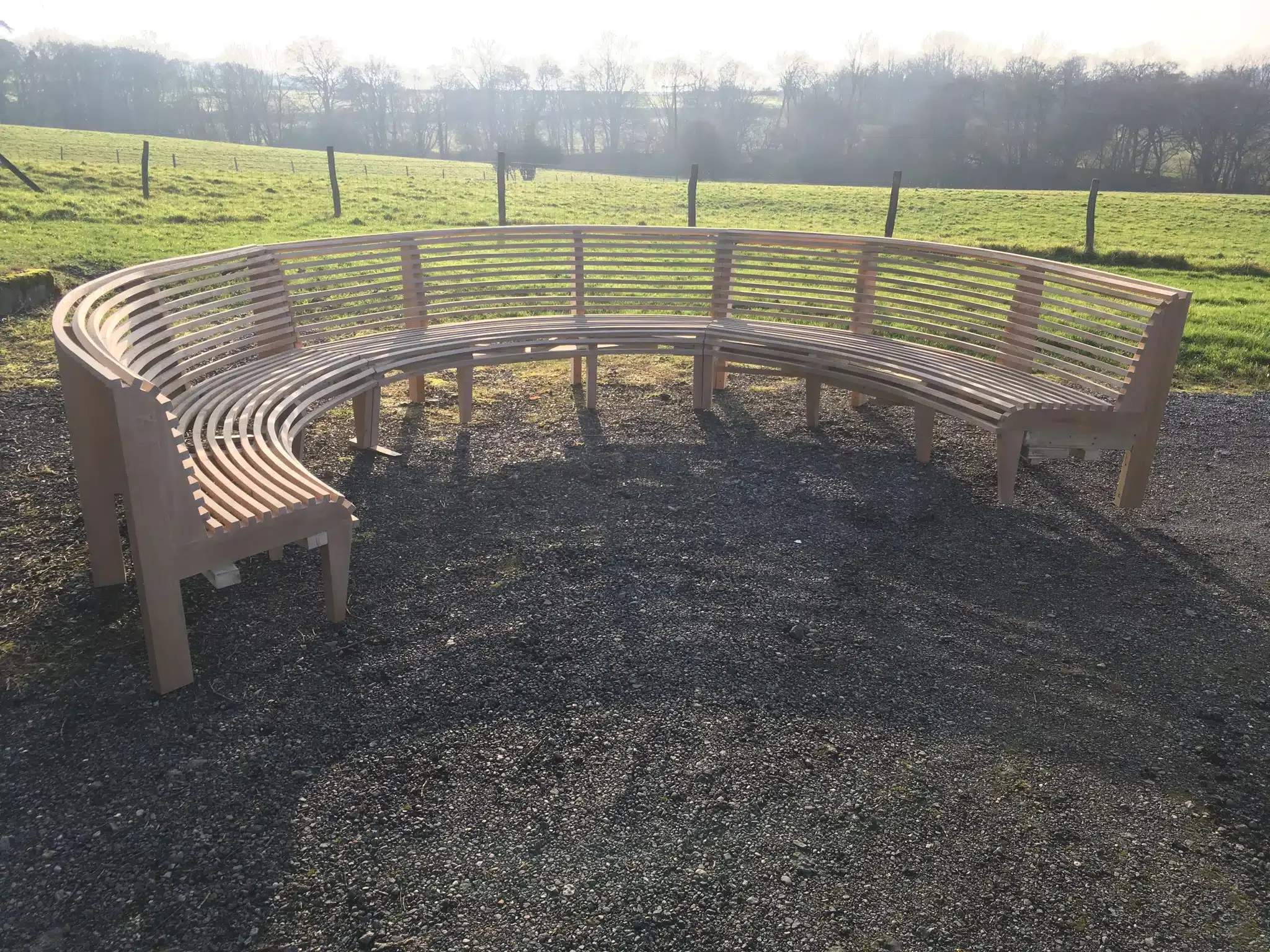
One early project was an amphitheatre-style outdoor room. I made three curved oak bench sections that fitted together to form a continuous seat around roughly two-thirds of the circle, backed by a sleeper wall. A robust jig held the work to the intended shape during construction.
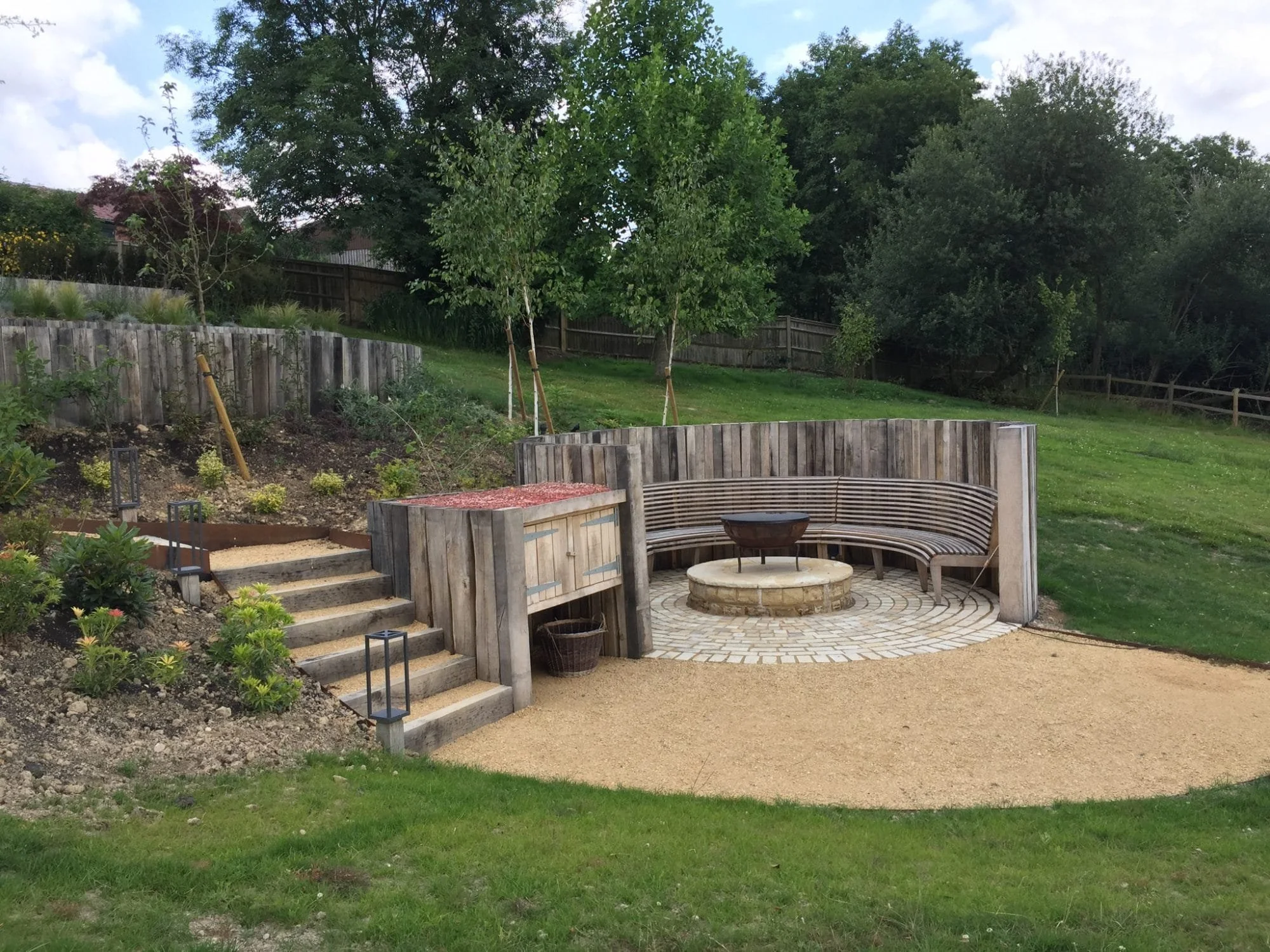
Another bench was made for a circular garden, positioned to look down a main vista. This combined oiled oak with a grey-finished metal frame.
Both began with the place and the purpose of the seating. The curve was there to support the garden design, rather than simply to demonstrate what could be made.
Why the jig matters
Steam bending relies on tooling as well as craftsmanship. The jig controls the shape, but achieving the intended result also involves understanding the timber, allowing for spring-back and experimenting with the process.
Almost anything may be possible, but a new design can require new jigs, trial pieces and adjustments before the finished bench can be made. That tooling-up and development work adds substantially to the cost, particularly for a one-off commission.
The benches we make
We generally work with the bench designs we have already developed. This avoids much of the expense of creating new tooling and experimenting from scratch.
Different designs can be considered, but the cost needs to reflect the work required to develop them, not just the timber and time needed to make the finished piece.